

Youth on Country
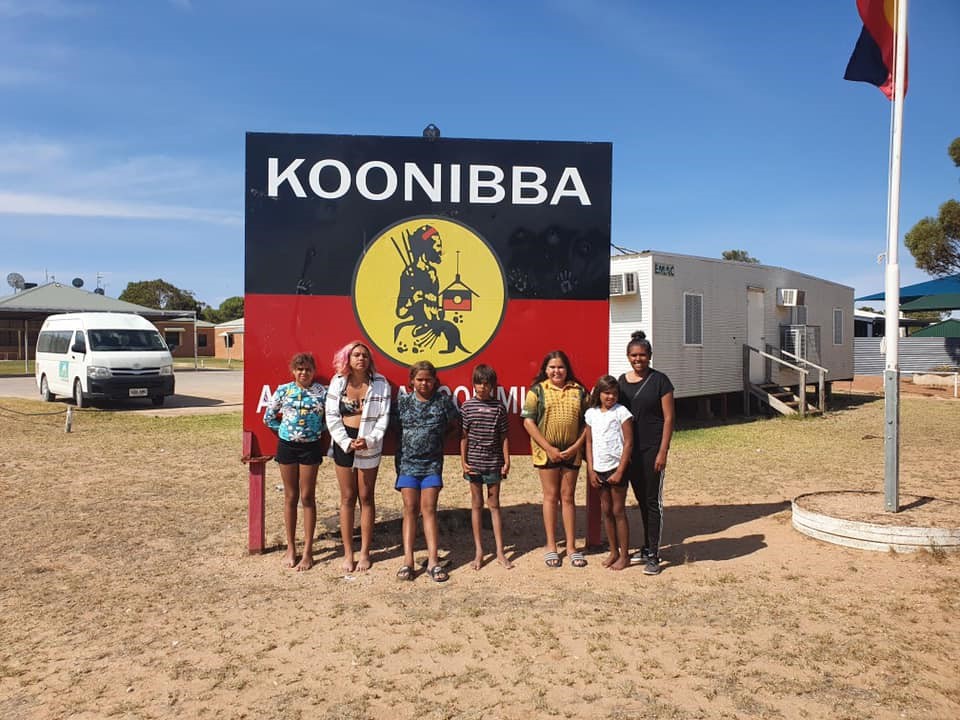
Bringing Aboriginal young people on the Lower Eyre Peninsula back to country as means of strengthening cultural connection, knowledge and confidence.
This project aims to provide aboriginal youth with a platform which they will be able to connect to their heritage and enable them to obtain a feeling of self-worth and have confidence in themselves. The youth are third and fourth generations desert people with limited connection to aboriginal culture.
The youth will be taken to Koonibba, Bookabie, visiting Fowlers Bay, Coorabie, and Yalata and meeting and hearing stories, experiencing the cooking and consuming of bush tucker it will provide an insight into their heritage, enable the youth to trace their roots and instil confidence and pride. It will provide them with practical skills backed with an insight to just how hard their elders had to work to establish infrastructure and change their way of life to assimilate with western society. This included language skills and changing to a totally different education and employment system.
The confidence that will be gained by improved knowledge of the Aboriginal heritage and exposure to Aboriginal culture will assist individuals as well as teams to volunteer in the recovery of social, recreational, sporting events that will be a benefit to the community of Eyre Peninsula.
This project links closely with the following strategic documents:
- A national COVID-19 pandemic issues paper on mental health and wellbeing for Aboriginal and Torres Strait Islander peoples (P. Dudgeon, M. Wright, K. Derry, University of Western Australia) which has outlined the impact of COVID-19 on the mental health and wellbeing of Indigenous Australians, revealing that the pandemic has put many Indigenous Australians at risk of severe psychological distress.
- South Australian Youth Action Plan
Project Achievements
This project enabled a group of youth Eyre Peninsula to connect with their heritage and aboriginal culture through ‘going back to country’ and visiting a number of Aboriginal communities in the Eyre Peninsula.
All excursions had a focus on cultural connections and learning with a secondary focus to support young people to participate more meaningfully in their communities and drive decision making. The cultural connections that were undertaken were the Camp being supported by a young person who is a Far West Native Title holder, with this young person leading (whilst being culturally respectful) and including conversation rather than older people so the young people participating can feel better connected. learning including a deep understanding of family/kin groups and why knowing this is important, visiting the Homelands- identifying whose family connections are there- viewing family name street signs, touring and showing them around at Koonibba. Passing on knowledge of bush foods, hunting and why this is important. Deep discussions around language connections and how you can learn this if you are interested. Deep discussion of the importance of songlines/beliefs and stories and how young children and young people were supported to understand what to do and not do through the use of these stories, discussed this in context of two camp facilitators and boundaries for youth on the camp.
A focus of this camp due to Scotdesco being closed for summer was to share learning experiences between West Coast young people on country- so we worked closely with the Ceduna Youth Hub and spent joint days together so young people (and family groups) could connect in a positive way.
One night bush camp
A one-night bush camp in the national park was held in order to prepare the participants for the trip 'back to country'.
The groups were split into two overnight camps, 6 males and 8 females.
The youth participated in the planning of the camps which focused on the development of a range of skills including;
- problem-solving
- bush safety
- learning about family connections and kin groups.
The young people participated in all aspects of the camp including, setup, meal preparation and cooking and some of them were given the opportunity of filming some of the camp activities with an Aboriginal Cinematographer.
Further camps were held at Ceduna’s Emu farm in January with 2 male/ 5 females attending, A Scotdesco camp in April with 8 males attending and a final camp at Scotdesco in July with 7 males and 4 females attending. These camps had an emphasis on connection to the community.
Far West Trip
Aboriginal youth whose family’s ties come from the Far West Coast of Ceduna and the communities as Koonibba, Yalata and surrounding homelands, as well as those, showed an interest in learning more about the culture were recruited for the trip. With seven youth (five females and two males) in the age range between 10 and 15 attending.
The young people worked together with the youth workers planning all aspects of the five-day camp. The camp combined social activities and networking with a focus on cultural connection and learning. The group was mentored by a young person (Far West Native Title holder). The group was introduced to a range of cultural learnings including;
- understanding of family/kin groups and why knowing this is important
- visiting the Homelands
- identifying whose family connections are there
- viewing family name street signs, touring and showing them around at Kooniba
- identifying whose family connections are there
- knowledge of bush foods, hunting and why this is important.
- kanguage connections and how you can learn the language
- the importance of songlines/beliefs and stories and how young children and young people were supported to understand what to do and not do through the use of these stories.
A focus of this camp was to work with the Ceduna Youth Hub to share learning experiences with young people in West Coast. The two groups spent joint days together so young people (and family groups) could connect in a positive way.
The young people had mixed reactions about being "back" on the country, for some this was the first time they had ever been on the country so their concept of this was quite broad. Some of the places they visited were very different from Port Lincoln.
Some of the youth noted that they disconnected and different living in Port Lincon and they enjoyed the experience of connecting to the country. However, they also found it confronting at times.
Being out in Koonibba was the main experience for the young people because they always heard about the place but being there in person and seeing the community was very good and the youth loved it. For the worker supporting (a young person himself), it was also good being back at home as he previously lived in Koonibba before moving out of the community to explore opportunities.
How were youth recruited for Far West Trip?
We targeted indigenous youth whose family’s ties come from the Far West Coast of Ceduna and the communities as Koonibba, Yalata and surrounding homelands. Family groups included Roderick's, Betts, Ware, and Kent’s. Young people were asked if they would like to come along to the camp or young people who have previously identified wanting to learn more. CJ coaches the U15 team at Mallee Park Football Club and the boys was selected from that team to come on camp due to being from Ceduna and haven’t been as far past from Ceduna. Some were identified through Vulnerable Families and Young Persons Framework (VFYPF)* and Youth Justice.
Project Outcomes
The evaluation was conducted in the form of discussions with young people and their families. Discussions at The Vulnerable Families and Young Persons Framework meetings. At West Coast youth And Community Support between staff and with review meeting with Peter Scott, Executive Officer EPLGA and Howard Coote, Indigenous Economic Manager RDAEP. Evaluation workshops were held in the Regional Development Australia Eyre Peninsula Board room. The outcomes of the project evaluations showed young people connected with their culture and heritage, they volunteered not only during but after the camps and their families were happy their young people had been to experience the places they grew up. Longer-term positive relationships with family and staff have enabled better connections, trust and further referrals to support services. The young people who attend can also be utilised as leads for the next camps if were are able to run them. We have no doubt any future camps would be extremely beneficial long term. Extending from the Scotdesco camps we could look to the Maralinga area for future opportunities and learning.
The sharing and promotion became very easy. Young people raved to the family and friends of the project. By the last camp, it became difficult to involve all the young people who wanted to come. If any future camps are run it would be easy to fill spots. Social media was used to promote the camp with photos shared on the Service To Aboriginal Youth Facebook page. Of huge note here though is the Youth court was amending bails and putting in stipulations so young people could attend the camps- a testament to the value the camps had for young people. The camp was also discussed prior and as follow up at the fortnightly Vulnerable Families and Young Persons Framework meetings in Port Lincoln. Some participants come from this vulnerable group. Something we acknowledge we could get better on is our use of social media, in particular, tagging etc; this will be learning we will take away.
Ongoing Learning and collaborations
Sustainability- The learnings for this camp are now already being integrated into the daily operations of programs. More youth lead and volunteering is evident and will now be a focus of future events through the whole of the organisation. We are very eager to keep this project going and will be seeking grant opportunities to continue achieving great outcomes.
Out of organisation partnerships have been a significant win for the program. YADU health, Ceduna Youth Hub and Koonibba youth all collaborated in the final camp. Events were run almost daily between the organisations. These relationships will continue post-2021. The relationship with CAC, Scotdesco and the Far West language centre is also of note. No to mention the many businesses young people now feel comfortable visiting on the highway compared to before. The Vulnerable families group have also become strong advocates of the project.
This project has received funding from the Department of Human Services Youth-led COVID-19 Recovery Grants and administered by the Local Government Association of South Australia.