Emissions reduction
While much of the focus is on climate adaptation, we know that the scale to which we need to adapt will be governed by the scale of the change we experience. By reducing our impact on climate change through the reduction of greenhouse gas emissions, we also reduce our climate related risk and exposure, and limit the requisite adaptation effort needed.
It’s true that many councils, governments and organisations are well on their way to reducing their own corporate emissions, and many setting ambitious Net- Zero targets, or are already achieving carbon neutrality. Others however, may just be starting their journey.
Local Government Net Zero Accelerate Program - Best practice guide
The Net Zero Accelerate Program was established to help South Australian councils reduce greenhouse gas emissions and meet state targets.
Funded by the Department of Environment and Water and LGA South Australia, the program supports councils in:
- identifying and reporting emissions
- improving skills to reduce Scope 1, 2, and 3 emissions
- developing consistent emissions reduction strategies.
The program has been supported by dsquared Consulting. It has been successful in generating outcomes to:
- help councils create emissions reduction plans
- identify baseline emissions profiles for 15 councils
- host collaborative workshops
- produce emissions summary reports and key recommendations for sector-wide initiatives.
Following the successful trial program in 2023 with 15 councils the following resources are now available for South Australian councils:
- Best practice guide to Emissions Management for Local Government in SA - Updated - to support councils to develop emissions inventory and reduction strategies. Key updates include emissions factors from the 2025 National Greenhouse Accounts and electricity emission projections.
- A Sector wide summary for Local Government Emissions in SA - reports the total GHG emission for the sector.
Net Zero Accelerate Program - Guide Notes
A suite of guide notes has been developed to assist local government in the evaluation, strategic planning, and integration of emissions reduction initiatives within council operations. These resources focus on key topics in emissions management covered in the Net Zero Accelerate workshop series delivered between March and July 2025:
Where to start?
Below is some high level information and definitions of terminology to help you start your emissions reduction journey.
There are many third-party consultants that can undertake a carbon inventory of your business and help establish your emissions reduction plan. While each will have their own approach, essentially they will all follow the following process.
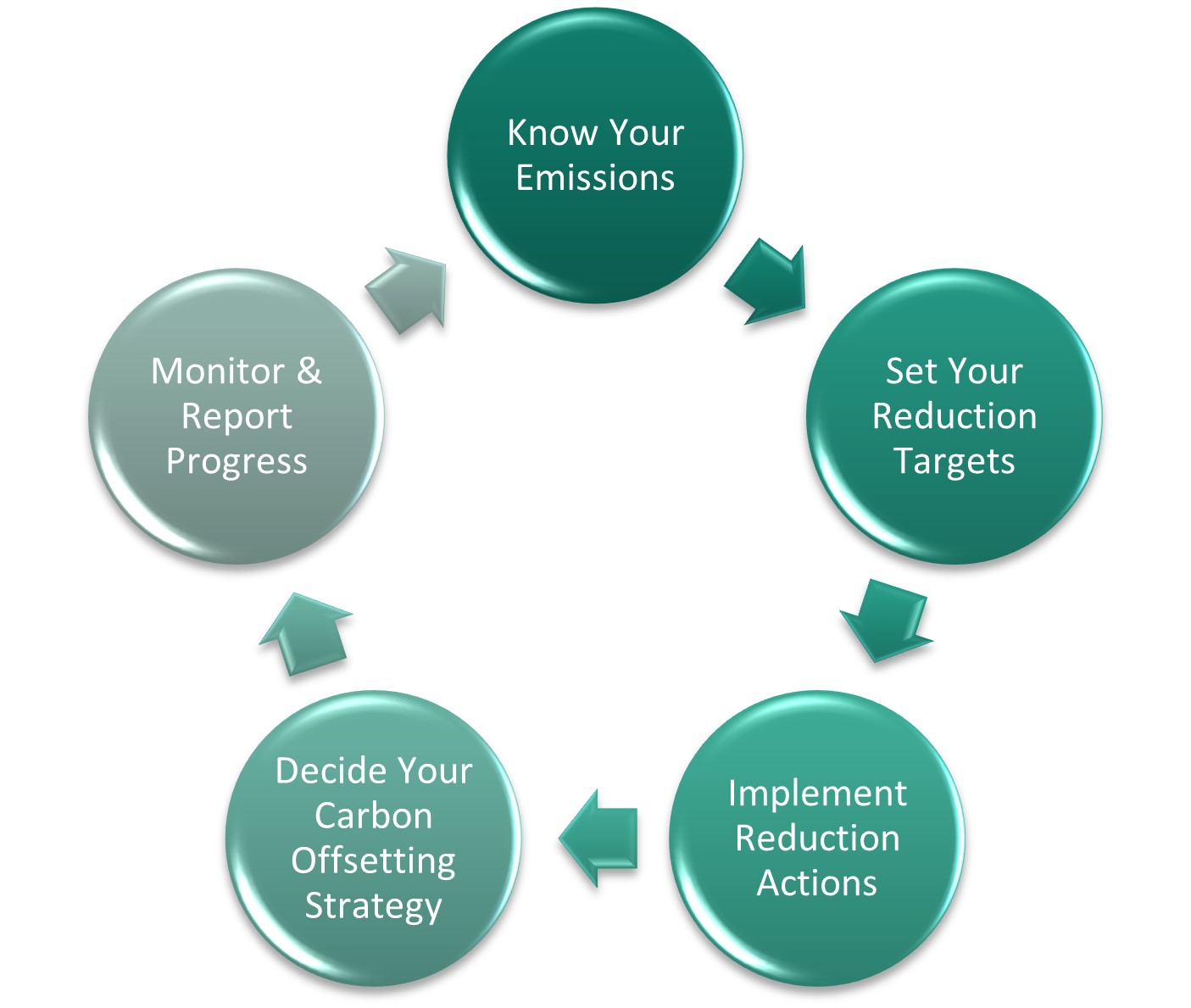
Understanding Emissions - Scope 1, 2 and 3
Under the international Greenhouse Gas (GHG) Protocol, emissions are broken down into three scopes, depending on the source.
- Scope 1: includes all direct emissions that are generated from sources that are directly owned or controlled by your organisation.
- Scope 2: includes all indirect emissions from the generation of the electricity purchased and used by your organisation
- Scope 3: includes all indirect emissions that occur in your organisation’s value chain. These are emissions associated with activities that you do not own or control, but are created because you exist (e.g. goods and services you buy).
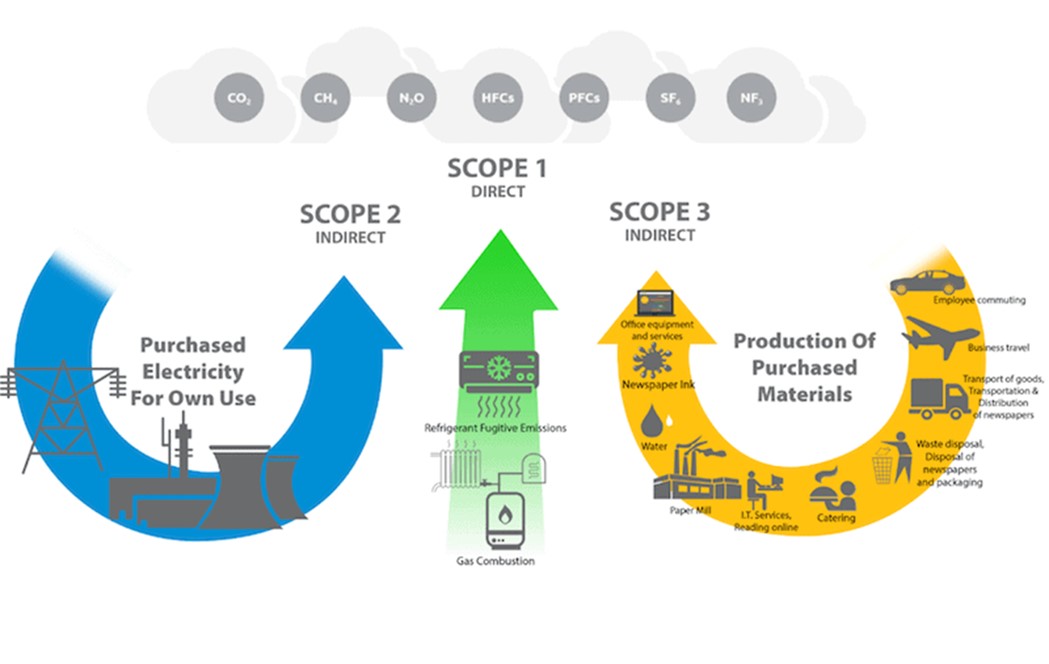
Source: GHG Protocol (ghgprotocol.org)
The first step in understanding your emissions is to measure them and create a baseline. The standards used for assessing your scope 1, 2 and 3 emissions are important and may be governed by the accreditation framework you wish to pursue (e.g. Climate Active).
Therefore, understanding this from the outset is important in establishing your baseline year.
Setting Reduction Targets
Carbon Neutral vs Net Zero
Whether you use Carbon Neutral, Net-Zero, or even Climate Neutral, to describe your goal, they all represent the same intent – to eliminate your organisation’s impact on the environment. There are however some differences to be aware of.
Carbon Neutrality often refers to net-zero carbon dioxide (CO2) emissions, where the total CO2 emissions are balanced by CO2 removal from the atmosphere.
Net-Zero is an expanded term that refers to all greenhouse gas emissions (carbon dioxide, carbon monoxide, nitrous oxide, methane, etc) and again refers to balancing emissions with removal.
Science-based targets
Science-based targets provide organisations with a clearly-defined path to reduce emissions in line with the Paris Agreement goals. That is, emission reduction plans are aligned with efforts to ensure we limit global temperature rises to no more than 1.5 degrees Celsius. To achieve this, emissions must halve by 2030 and drop to net-zero by 2050.
The South Australian Government has also set targets in line with the Paris Agreement goals and this science-based approach.
Useful links
Administered by the Clean Energy Regulator, the National Greenhouse and Energy Reporting (NGER) Scheme is a single national framework for reporting company information about:
| |
The National Australian Built Environment Rating System (NABERS) provides a rating and accreditation system for sustainable and energy efficient buildings. | |
Produced in 2018 by Sustainability Victoria, this Learner’s Guide can help you develop you carbon accounting process and emissions reduction strategy. | |
Supported by the Australian Government, Climate Active represents Australia’s collective effort to measure, reduce, and offset carbon emissions, using the Climate Active Carbon Neutral Standard. | |
A community of government and private partners with a shared ambition to make Adelaide a carbon neutral city. | |
| Carbon calculator tool for road and footpath designs | This tool calculates road and footpath carbon emissions based on the design, materials and construction. This allows building and asset managers to compare different options. Supporting documentation for the tool (ZIP 7.3 MB) is available, which includes user guides, case studies and technical memos. This tool was developed by ARUP. The project was led by the City of Charles Sturt and funded by the Local Government Research and Development Scheme. |
| Greenhouse Gas Emissions | This spreadsheet is designed to help councils calculate their Scope 1 and Scope 2 greenhouse gas (GHG) emissions. Scope 1 emissions: Direct, unavoidable emissions from sources the council owns or controls (e.g. natural gas, LPG, diesel, petrol). Scope 2 emissions: Indirect emissions from the production of purchased electricity. The tool was originally developed and used by the City of Burnside. It is tailored to their needs and may need to be adapted for your council’s requirements. |