Coastal management
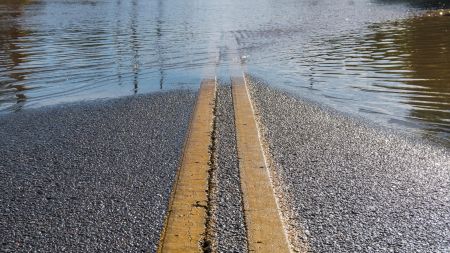
South Australian coastal communities and councils are facing difficult and costly issues associated with coastal inundation and erosion as the climate changes and extreme weather events become more common.
Responsibilities for coastal management is shared between all levels of government, private parties, and communities.
On this page:
- Role of local government
- Role of state government
- Climate Ready Coasts program
- Coastal hazard adaptation planning guidelines
- Coastal adaptation support resources
Role of local government
Local government has an important role in shaping communities through planning, service delivery, community engagement, and economic development.
Capacity and capabilities vary across the state. But, in general, local government's role in coastal management is to:
- manage council assets along the coast
- maintain, manage, and improve the resilience of coastal ecosystems and natural areas which councils own or for which they have care and control
- support council staff to have the knowledge, tools, and expertise they need to manage coastal risks relevant to their areas of responsibility
- share relevant information about the coast and hazards with the community.
A council's capacity to undertake these roles usually depends on factors like resourcing, knowledge and technical capability. It also depends on the extent of state government and other stakeholder involvement in local coastal management.
Role of state government
The SA Government delivers a broad range of services and administers coastal management legislation, as well as other legislation that impacts the coastal areas. This includes land use planning and environmental management.
They also manage a substantial number of assets along the coast, including infrastructure of state or national significance.
Responsibilities of the SA Coast Protection Board
SA Government’s role in coastal management includes establishing and operating the SA Coast Protection Board (CPB).
Responsibilities of the CPB include to:
- protect and restore the coast from erosion, damage, deterioration, pollution, and misuse
- develop any part of the coast aesthetically, or to improve it for those who use and enjoy it
- manage, maintain and, develop coast facilities for which the Board is responsible
- report to the Minister where required
- undertake, or be involved in, research into the protection, restoration, or development of the coast.
State government coastal management resources
State government information resources about coastal management include:
- Department for Environment and Water’s Coast Unit
- Department for Environment and Water’s research, reports and policies
- Coastal Flood Mapping Viewer
- Coast Protection Board
- Coast Protection Board Policy 2022 (PDF 4.6 MB).
Climate Ready Coasts program
In the context of increasing coastal hazards and rising sea levels, SA Climate Ready Coasts (CRC) was initiated to accelerate coastal hazard adaptation planning and action.
The premise of CRC is that minimising the costs and impacts of accelerating coastal hazards requires strategic and systemic action, and all levels of government benefit from this work being undertaken in a consistent, evidence-based and well-coordinated manner.
CRC is driving a multi-pronged approach focused on data, monitoring infrastructure, adaptation planning, technical support and capacity building. This is through an innovative partnership between LGA South Australia (LGA), the SA Coast Protection Board (CPB), the Department for Environment and Water (DEW), SA Coastal Councils Alliance (SACCA), and Adelaide Coastal Councils Network (ACCN).
The program started in July 2023 and will end in June 2029.
Visit SA Climate Ready Coasts for more information.
Funding for the program
The SA Climate Ready Coasts program is funded by:
- Australian government: Coastal and Estuarine Risk Mitigation Program
- State government: SA Coast Protection Board
- Local government: Local Government Research and Development Scheme.
Coastal hazard adaptation planning guidelines
A key deliverable of the SA Climate Ready Coasts program is new Coastal Hazard Adaptation Planning Guidelines for South Australia. These guidelines were jointly adopted by the LGA Board and Coast Protection Board in December 2024.
View the Coastal Hazard Adaptation Planning Guidelines (PDF 7.8 MB).
The guidelines provide step-by-step guidance on how to prepare a Coastal Hazard Adaptation Plan (CHAP) in South Australia. The guidelines have been co-created with coastal practitioners and decision-makers from local and state government and informed by:
- analysis of coastal hazard adaptation planning frameworks implemented in other Australian states and overseas
- an engagement program with local and state government stakeholders to learn from their adaptation experiences, and identify needs, requirements, and expectations.
The guidelines facilitate a standardised approach to coastal hazard adaptation planning to enable robust and consistent decision-making and resource allocation at all governance scales. They've been developed with different coastal contexts in mind. This provides flexible application to suit any kind of coastal hazard, local coastal governance arrangement, or resource base.
Coastal adaptation support resources
The Climate Ready Coasts program has developed a series of compendiums, practical tools and templates. This is to support coastal practitioners with the practical use of the guidelines.
These resources will be periodically updated and your feedback is welcome. To provide feedback or ask any questions about the resources, please email ClimateReadyCoasts@lga.sa.gov.au.
Compendiums
The compendiums contain detailed information on specific aspects of coastal hazard adaptation planning.
Compendiums have been developed for the following topics:
- coastal hazard assessment (PDF 3.5 MB)
- coastal adaptation actions (PDF 8.2 MB)
- economic analysis in coastal adaptation (PDF 2.0 MB)
- engaging stakeholders and communities in coastal adaptation (PDF 2.9 MB).
Templates and tools
Coastal Hazard Adaptation Plan (CHAP) templates and tools:
- CHAP project plan template (DOCX 41.4 KB)
- CHAP engagement plan template (DOCX 40.0 KB)
- CHAP risk assessment, multicriteria assessment and implementation plan templates (XLSX 34.5 KB)
- CHAP matrix of engagement methods (PDF 270.0 KB)
- CHAP engagement tools and templates (DOCX 71.2 KB)
- CHAP stakeholder assessment template (XLSX 34.3 KB)
Further information
Further information is available through these sources:
Resource | Provider |
|---|---|
Geoscience Australia | |
Geoscience Australia | |
Geoscience Australia | |
Australian Hydrographic Office (AHO) | |
Bureau of Meteorology (BoM) | |
National Oceanography Centre, UK | |
CSIRO | |
NASA | |
Intergovernmental Panel on Climate Change (IPCC) | |
CSIRO and Bureau of Meteorology (BoM) | |
Bureau of Meteorology (BoM) | |
Bureau of Meteorology (BoM) | |
Bureau of Meteorology (BoM) | |
Geoscience Australia | |
Department for Environment and Water (SA) | |
Department for Environment and Water (SA) | |
Flinders University and SARDI | |
Integrated Marine Observing System (IMOS) | |
SARDI | |
Data.SA (Government of SA) | |
Department for Environment and Water (SA) | |
Government of SA | |
Department for Environment and Water (SA) | |
Department for Environment and Water (SA) | |
Department for Infrastructure and Transport (SA) |